Painters, poets, writers · Gallery 1 / 29
At the heart of art, at the heart of life…
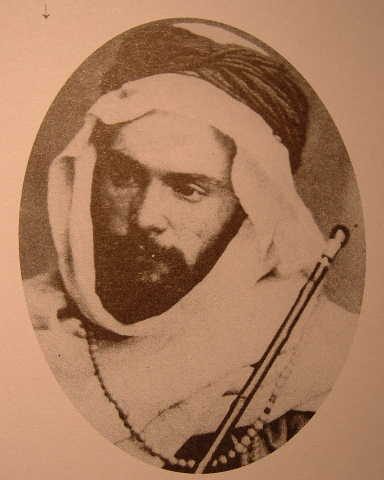
Gustave-Achille Guillaumet
1840-1887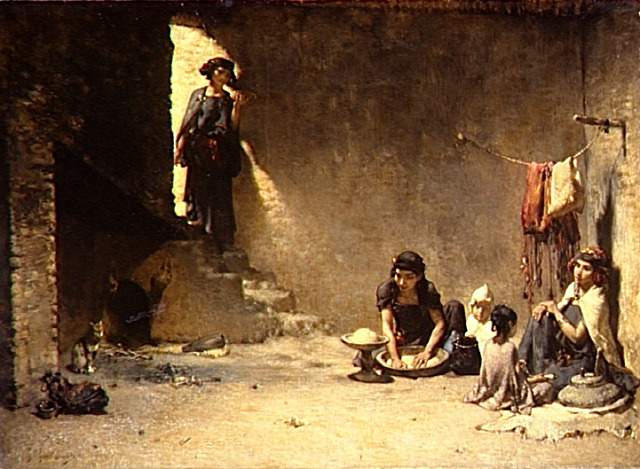
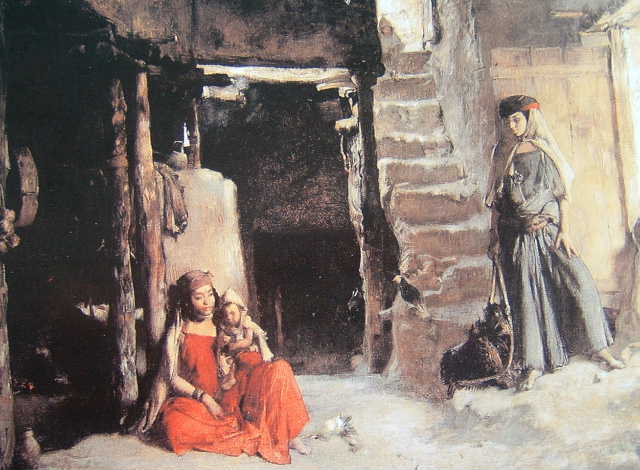
Having failed to win the Prix de Rome for historical landscape in 1861, Gustave Guillaumet set off for Algeria on impulse; this journey, which he repeated ten times, shaped his development as a painter. A regular exhibitor at the Salon from 1861, he is best known today for his Orientalist landscapes: he mainly painted landscapes and scenes of outdoor life.
Orientalism →
Armand Jamar
1870-1946
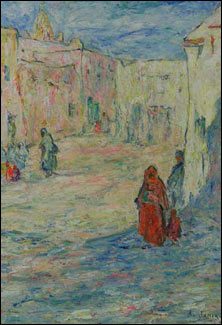
Armand Jamar travelled all over Belgium, from the Ardennes to the coast, painting many landscapes (Gaume, the Meuse, the Campine…) and views of Bruges, Leuven and Brussels. He stopped in London after painting the cliffs of Dover. The south of the Netherlands inspired seascapes, landscapes and interior scenes. During his many stays in Italy he was drawn above all to Venice, collecting its famous sites, its canals and the lagoon where a sail is always gliding. In Spain he stopped in Toledo, Granada, Almería and Burgos; in Switzerland, around Montreux. His travels also took him to Algeria, to Bou-Saada, and to New York. But it is undoubtedly France, where he stayed regularly between 1898 and 1934, that holds pride of place in his work: Brittany, Normandy, Languedoc and Roussillon, the Bouches-du-Rhône, the Basque coast, the Paris region, Savoy…

Louis Granata
1901-1964

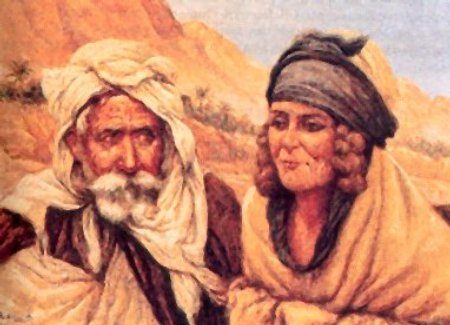
Born in Italy, he worked first in pastel and later in oil. He had a studio in Algiers and painted typical scenes in southern Algeria: figures, landscapes of Bou-Saada and Kabylia, seascapes. He won many awards, including the Grand Prix of the Société libre des artistes algériens in 1938 and a silver medal from Arts, Sciences et Lettres in 1960.
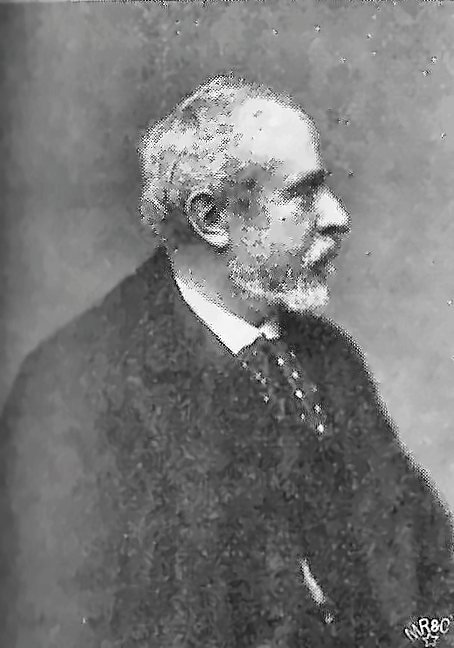
Louis-Ernest Barrias
1841-1905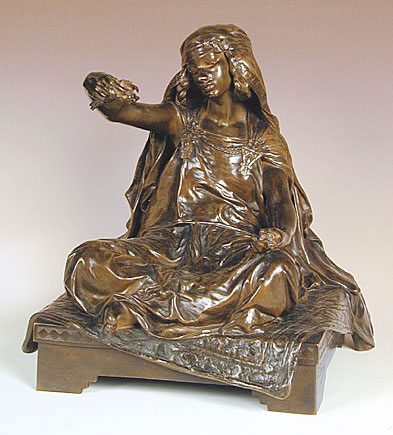
Louis-Ernest Barrias entered the École des Beaux-Arts in Paris in 1858 and won the Grand Prix de Rome in 1864. He worked on the Paris Opera and carved a marble statue of Virgil (1865) for the staircase of the Hôtel de la Païva on the Champs-Élysées.
Alain Daniélou
1907-1994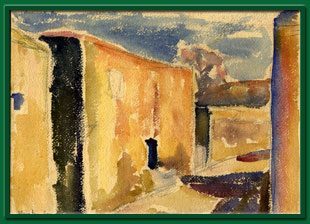
Alain Daniélou was born in Neuilly-sur-Seine on 4 October 1907. In 1981 he received the UNESCO/IMC Music Prize and in 1987 UNESCO's “Kathmandu” medal; he was an honorary member of the International Music Council, honorary president of the music institutes of Berlin and Venice, and a member of the Société des gens de lettres. In 1991 he received the Cervo Prize for new music and became a member of the Indian National Academy of Music and Dance; in 1992 the Berlin Senate made him professor emeritus. He died in Switzerland on 27 January 1994 and, as a good Hindu, asked to be cremated. He painted “Bou-Saada” in 1928.