Painters, poets, writers · Gallery 20 / 29
At the heart of art, at the heart of life…
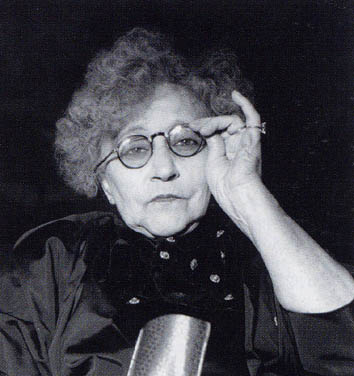
Colette 1873-1954
Colette in Bou-Saâda
The daughter of Captain Colette and Sidonie Landoy (“Sido”), Colette always kept from her country childhood a love and an almost instinctive understanding of animals and nature.
At twenty she married a fashionable man of letters fourteen years her senior, Henri Gauthier-Villars, known as Willy. He encouraged her to turn her childhood memories into fiction, in collaboration with him, and published Colette's first works under his own name: the famous Claudine series (1900-1903), with Claudine at School, Claudine in Paris, Claudine Married and Claudine and Annie.
In 1904 came the break and the move to “Colette, author”: she signed Dialogues de bêtes under her own name. Her divorce, granted in 1906, inspired La Retraite sentimentale (1907). While leading a scattered, exhausting life in the music hall, performing mime, Colette found serenity and fulfilment again.
Between 1908 and 1914 she published works that are so many meditations on solitude: Les Vrilles de la vigne (1908), La Vagabonde (1910), L'Entrave (1913). In 1912 she remarried, to a politician, Henry de Jouvenel; their daughter, Bel-Gazou, was born in 1913.
Then came the First World War: Colette wrote brilliant articles, stories, columns and theatre reviews for various newspapers — Le Matin, Le Figaro, La Vie parisienne… These texts were later collected in several volumes: Dans la foule, Aventures quotidiennes and Les Heures longues.
Once peace returned, she went on with her work, drawing the themes of her novels from her own life, from the experience of her marriages, from the spectacle of nature and from love. This is when she published works of psychological depth such as Chéri (1920) and The Last of Chéri (1926), on the clashes of the couple; Le Blé en herbe (1923), on the confusion of adolescence; La Chatte (1933) and Duo (1934), on the torments of jealousy; La Naissance du jour (1928), on renunciation. These works reveal lived experience and close observation of the world around the author and, above all — starting from childhood dreamt anew (La Maison de Claudine, 1922), its enchantments and nostalgias (Sido, 1930) — the double, never-ending quest for identity and freedom: Colette will for ever be L'Ingénue libertine (1903) and La Vagabonde (1910).
In 1935 Colette married for the third time, to the writer Maurice Goudeket, and settled in the very heart of Paris, at the Palais-Royal. Elected to the Royal Academy of French Language and Literature of Belgium (1936), she went on revealing new facets of her talent: the mischievousness of the child-woman (Gigi, 1944), the moralist in L'Étoile Vesper (1947) and Le Fanal bleu. Elected to the Académie Goncourt in 1945, she died at the height of her literary fame on 3 April 1954 in Paris.
After her death her correspondence was published, notably Lettres de la vagabonde (1961) and Lettres au petit corsaire (1963).
from: http://www.aflaurent.com/
DESERT FLOWER
We had noticed her as we entered Bou-Saâda, at the hour when the setting sun lays upon the nearest mountain a
sudden violet colour, and upon the farthest a pink as pale as the pink of red-hot iron in broad daylight. Fatigue, wonder, three hundred kilometres of desert unrolled before our ignorant eyes, the sirocco, the iridescent space behind a hanging curtain of sand, had made us dazzled and credulous creatures. The same exclamation, bursting from our lips salty with dust, greeted the brief twilight and the pink glow, drawn by an almost nocturnal sky from sands that were themselves pink and brighter than the sky; the rockets of flowering oleander, the burning green of the palm grove and the refreshing shape of the palms, spread like fountains; the heavy, powerful flight of an enormous carrion bird, the thread of a spring issuing from a scorched mountain, the gauze, as if sparkling with water, of a locust with the wingspan of a swallow…
The little girl we had noticed was sitting against a crumbling wall of raw clay, a few hand-moulded blocks, half worn away and melted — all that remains of a native dwelling after a short rain and a long drought. She might have been five years old, and she shone with melancholy coquetry. Her crossed fawn's ankles played in anklets of rough silver; threads of tin-coloured metal jingled on her arms, and with the curiosity of barbarians we touched her little feet crusted with mud from the stream and her precious hands, never washed, browned with henna. She had huge eyebrows, painted bright black across her forehead, a proud mouth with full corners and fine teeth, and ageless eyes, languorous between lashes thickened with kohl. A blue star marked each round cheekbone, a blue arrow divided her chin. Clusters of blue signs extended the line of her eyebrows between her eyes. A reddish rag twisted over her hair revealed two tiny dusty braids curled over her ears like ram's horns; other shreds of cotton offered to view here a slender knee, there the hollow flank of a little greyhound. The crumbled bank exactly matched the colour of her skin, a pale yellow mysteriously mingled with pink, and the motionless little girl seemed born a moment before, freshly kneaded from blond clay, modelled from a handful of desert.
She held out a hand and begged in a shrill voice, in Arabic. We had no change, yet Daurces found a twenty-five-centime coin, one without a hole, and the henna-stained fingers closed upon it.
— Saha! Saha!
With this thank-you the little girl leapt up and ran off, raising two wings of sunlit dust at her heels. She turned round only once, to thank us with a wave, with imperious grace. The next day, in the garden of the Petit-Sahara, we were waiting for lunch, worn out and exhausted by the obligatory outings: to the poor mosque; to the fetid, flowery river where the men wash their linen upstream, the women downstream of the men, and the Jews downstream of the women; to the makers of high boots whose wool-embroidered uppers hug the leg; to Ben-Grada, who sells carpets, bracelets and ox-sinew whips sheathed in orange leather, but gives away his flowers, his scented cigarettes and his coffee in porcelain shells; to Zorah, who dances naked but never takes off her head veils or her jewels…
A small brown hand passed between the bars of the gate and held out to us a twenty-five-centime coin without a hole. A child's voice gurgled some Arabic; the eyes and teeth of the little Saha! Saha! girl were sparkling on the other side of the railings…
— Oh, it's the same charming little girl! What do you want? Ahmed, what is she asking for?
— She is giving the coin back, said Ahmed, our guide in his burnous. She wants local money.
— That's only fair, said Daurces.
He took back the coin and gave the desert flower a fine Algiers token, as large as a marigold, stamped with two palm trees — a brand-new two-sou token, made to dazzle a wild child.
The little coloured fingers did not close over the token, and Saha, Saha once again let out her throaty cooing…
— How pretty it is, that song of a slightly hoarse wood pigeon! No, Ahmed, don't send her away, leave her, let us listen… What is she saying? Is it a thank-you?
— She says, Ahmed explained placidly, that she is still owed three sous…
AHMED
— Ahmed, you won't forget to come at nine o'clock tonight?
— No, m'sieur.
— And you'll take us to Fatma's?
— Yes, m'sieur.
— Fatma, or perhaps Zorah or Yamina or Aïcha… You see who I mean? A girl who danced for me last year, a magnificent girl, you know, big here, big there…
Ahmed interrupts our companion with a sign and discreetly lowers his light-coffee eyelids over his dark-coffee eyes. He is very young and wily. His large eyes say nothing, but his fifteen-year-old mouth knows how to grimace like a European to express cunning, disdain, mockery, and to smile too much. It is not his fault. He lies in wait for tourists, guides them, listens to the coarse jokes of suburbanites who now treat themselves to three days of desert as they once treated themselves to an afternoon's boating on the Marne… He rubs up against our faults and our absurdities. He would imitate them, if the burnous did not force his thin adolescent body into oriental majesty.
— You may go, Ahmed.
He goes, or rather he seems to go. A fold of pink sand swallows up his burnous, which has taken from the desert its turtle-dove colour. We are free to go without him and drink anisette near the market square, to buy postcards without him under a kind of open shed that also sells fancy liqueurs, cans of petrol and tobacco. Without him we can watch the flocks of sheep going back to the fold, and pity the exhausted ewes that give birth on the road as they walk… We do not need him to climb, above the small, humble, dark mosque, onto the highest terrace of dried clay; from there we know, without a guide, how to toss at random onto one square of the chequerboard of terraces spread at our feet coins of silver and nickel, whose jingle brings out some naked child, some unveiled girl who, at the sight of us, turns away her blue-starred cheeks.
We do not need Ahmed, but he is everywhere at our side. Lying in the short shade of a wall melted by the last rains, visible between the stiff, thick palms fed by underground water, leaning limply against the railings of the garden around the hotel, Ahmed, uneasy, distrusts the faithless French until evening.
He reappears officially at the hour when, behind closed doors, the drums count out their uneven, tireless beats, like an anxious heart. He leans on the long stick he uses to push away the begging children — “Soldi, soldi, mossié l'amélicain” — and to knock roughly on the doors of the Ouled-Naïl houses. He goes ahead of us into the moonless night, which the sand lights up like snow, where nothing can be heard but the muffled drums, a piercing flute that goes down, up, down and up again a minor scale with the vain, exhausting obstinacy of a fountain, and the almost cold wind from the mountains, rustling the palms and pushing the sand…
A door opens, a door Ahmed has just knocked on like a master. It belongs to a slim, bustling Zorah, whose dark colouring and waist tightly girdled with silver make her look like an ant…
— She's not the one I'm looking for, says our companion. I told you, Ahmed, that superb girl, taller than all the others, whose name was, whose name was…
Ahmed's zeal does not wait for the end of the sentence:
— Come, m'sieur, come… Never mind Zorah, come…
The ample burnous and the long stick lead us to another threshold, to another room furnished with a bench, a rattan armchair, a brass bed and a carpet nailed to the wall. An enormous matron with large leonine eyes, and her daughter, a little beauty of fourteen or fifteen, will dance for us if we wish, or pour us green tea scented with mint…
— No, says our companion curtly. Ahmed, didn't you understand? I want to see that girl again who had plaits like ship's chains and showers of gold jewels in her ears; I remember they called her the Pearl…
Ahmed strikes his forehead:
— Yes!… Come, m'sieur, come…
But he takes us to a charming, faded, delicate creature with proud movements, a dry, princely hand, and the fire and aristocracy of certain consumptives…
— You've made a fool of me, Ahmed, says our companion as we leave. When someone makes a fool of me and I notice it, I don't pay. You won't get a sou for your evening.
An exaggerated sob stirs the darkness.
— I don't like, our stern companion goes on, being taken for an idiot. You only had to tell me you didn't know this… Fatma, Aïcha, this Pearl, whatever her name is…
A great surge of sincerity carries Ahmed right up to our companion, into the bar of chalky light thrown before the threshold of the last Ouled-Naïl by an acetylene lamp.
— M'sieur, I know her. But I can't take you… She is… she is in bed.
— In bed?
— Yes, m'sieur. Ill.
He sighs, shows the whites of his eyes and adds theatrically:
— Very ill!
Our companion suspiciously studies the young Arab face, turned green by the harsh butterfly of acetylene.
— Ill? You're lying. Anyway, I don't care. It's enough that you lied to me once. Not a sou, do you hear? Not a sou!
He turns on his heel, and Ahmed clings to him:
— I'll tell you! She's not ill!
— I don't care. Go away.
— She's not ill, she's… she's gone away!
— Will you let go of me?
— Listen, listen, m'sieur… She's gone away, m'sieur… Listen…
His protests followed us to the hotel gate, and we found him there the next day, humble and stubborn, still hoping for his tip. Our companion, who had learnt that morning what had become of his Pearl, called him:
— Ahmed! Here, take this, you little rascal.
— Thank you, m'sieur.
— You didn't know the Pearl was dead?
— Yes, m'sieur, I knew.
— Then why did you spin me all those yarns instead of simply telling me she was dead?
With an imperceptible movement Ahmed frees the edge of his burnous from the roumi's hand. Mystery and an enigmatic pride restore their original nobility to this still childish face, so practised in all the grimaces of servility and lying. He turns his head away and answers laconically:
— Not proper…
OULED-NAÏL The guide stopped in front of a barely visible door and knocked on it with his stick. Nothing answered, and all we could hear were the muffled sounds of a celebration in a distant house: the feverish beat of the big flat drum, the shrill clarinet shaped like a long-stemmed morning glory, whose biting sound sends nervous shivers over the skin, and the piercing ou-lou-lou-lou-lou. We could also hear the rustle of nearby palms and the crackle of the sand, carried by the night wind, drifting and raining finely against the walls. Our feet were bathed in a white, cold ash, shifting like a wave, from which rose a pale light, and because of this sand, the wind and the cool hour, we forgot the desert and thought of the sea and of a little beach in France.
The guide in his burnous knocked harder with the tip of his stick, and a ray of light split the door, opened cautiously. A jingle of bracelets, earrings and necklaces leaned towards us; the glow of the sand let us see the gleam of eyes, teeth and long jewels hanging around a face.
Our guide and the indistinct woman exchanged a few words in Arabic. I understood that she was protesting sharply and that he was insisting in a rough tone. At last she stepped aside and invited us in.
The glow of a small fire, lit on a hearth at elbow height, lit her in red; on the other side, the flame of an acetylene lamp hanging on the wall stuck patches of harsh blue-white light onto her dark skin.
— She is Yamina, the Arab guide introduced her.
Yamina laughed and held out to each of us a ceremonious hand, gloved in concentric henna patterns. She said “good evenink” to each of us, pronouncing it like the English actresses who play in French plays. Her very full white cotton skirt, edged with a deep flounce trimmed with pink, and her bodice with its square yoke and pink braid dressed her like a young lady of 1899. But her incomparable cigar-coloured feet remained bare except for the silver anklets set with little mobile rosettes that tinkled musically, and her belt of silver plaques clasped her waist according to the code of a pitiless coquetry.
While she prepared the green tea we followed her with the offensive curiosity of strangers. A pink scarf shot with gold broadened her small head and let hang a silk fringe that she kept tossing back. Two thick black braids curled round against her blue-starred cheek, veiled by a rain of little chains hanging from her earring, and bracelets bristling with spikes, tiered from wrist to elbow, protected Yamina's fragile arms.
She had little oriental modesty left, and flirted, as she poured her cloudy, fragrant tea into narrow blue glass tumblers, with the cordial boldness of a little Frankish innkeeper. Watching her bustle about, poking her bright fire, putting the kettle back on the embers, offering the sugar, we imagined some well-dressed housewife, with her land, her livestock and her vineyard beyond the door… But beyond the door, twenty metres away, was the end of the oasis, the abrupt edge of the green and fertile patch lost in the desert.
We were surprised that Yamina, despite the blue tattoos, the heavy jewels of the South and the painted eyelids, shone with a beauty that was, all in all, almost Western, and more expressive than regular.
Her easy laughter revealed fine broad teeth and gums as purple and violet as the flesh of a blood orange. She spoke no French, but she knew how to receive guests. Once the tea was drunk and the cigarettes lit, she seated us in a row against the wall, beside her fine brass bed covered with an American eiderdown, called in the drummer and the clarinettist from outside, and danced for us.
She danced, like all the Ouled-Naïl, with her arms and hands, her charming restless feet merely touching the ground as if it were a burning flagstone. She danced too with her loins and the muscles of her energetic little belly. Then she rested a moment, using her rest to unfasten her pink-trimmed bodice, her flounced skirt and her plain calico shift, for the guide demanded that she dance naked. Naked, she came back to the middle of the room, between us and the two musicians, who now had their backs to her. The red fire and the sinister white of the acetylene flame fought over Yamina's very young beauty, a light beauty, like a huntress's, not weighed down by bosom or hips.
She danced the same dances, knowing no others. But because she was naked, she stopped laughing and took back her gaze, which from then on no longer deigned to meet ours. Her gaze went away over our heads, laden with sovereign gravity and contempt, to join, far off, the invisible desert.